Seattle Weather By Month: A Boat Tour Planning Guide
Seattle's weather decides when cruises run, how long the daylight lasts and which whales are in the Sound. Here is what each month actually delivers on the water.
Short answer
Seattle's boating high season runs roughly April/May through October, when daylight peaks at 483 hours in July, June close behind at 477, and most cruise schedules run at full frequency. Rain falls in every month, but summer totals stay small, 0.42 inches in July. Whale watching is most reliable April/May through September/October, and many operators reduce sailings November through March.
What Does Seattle Weather By Month Actually Look Like?
Seattle's year splits into a long, bright boating season and a shorter, wetter one. High season for cruises runs roughly April/May through October, aligned with longer daylight and the Port of Seattle's cruise-ship traffic. Rain falls in every month, but summer amounts are modest, and the city's 2026 rainfall is tracking about 7 percent below normal, which has made the water unusually inviting this year.
The numbers behind that picture come from long-term climate records and the current year's observations. The 1991 to 2020 climate normals for Seattle put the January daily mean near 42.8 degrees Fahrenheit and the July and August means near 67 degrees, a mild range by Midwest or East Coast standards. What shapes a boat tour more than temperature is the combination of daylight and schedule: operators run their fullest timetables when evenings stay light, and cut back when they do not.
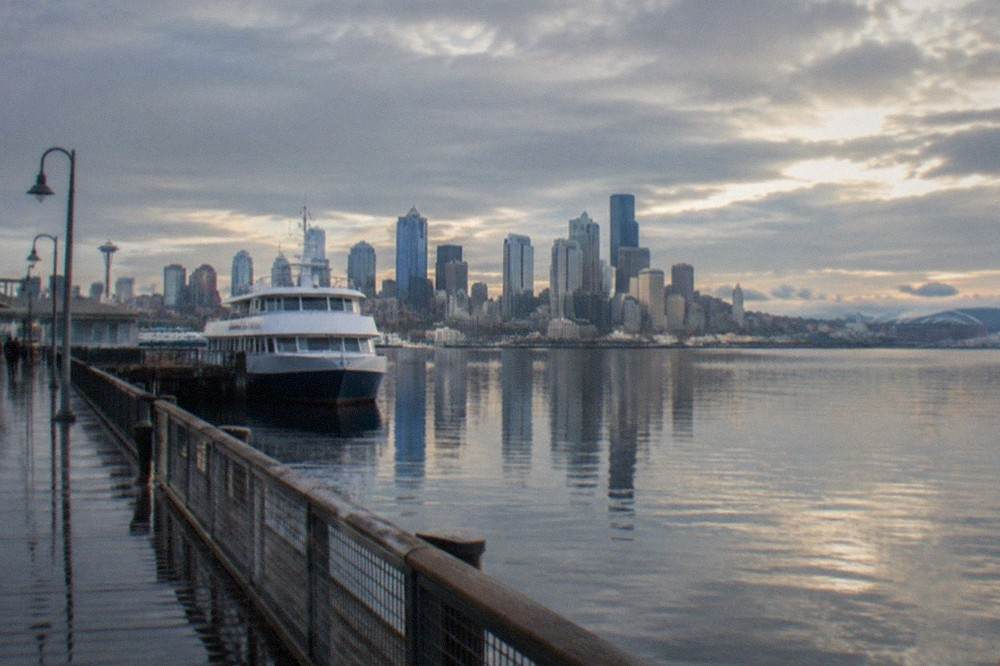
The Port of Seattle's Alaska cruise season frames the waterfront mood as much as the weather does. In 2026 that season ran from the first arrival on April 17 to the last departure on October 11, with 330 vessel calls expected, and the sightseeing and sunset fleets around them scale up over the same window. For a fuller treatment of picking a departure window, the best time of year for a Seattle boat tour breaks the season into shoulder and peak choices.
March is the wildcard month. The 2026 March total of 6.71 inches came in well above the 4.17 inch normal, a reminder that a single wet month can buck an otherwise dry pattern, while April and May both finished below normal. Planning around the general April to October pattern is sound, but checking the forecast in the final week before a sailing matters more in spring than in high summer.
Which Months Around Seattle Have The Most Daylight For Cruising?
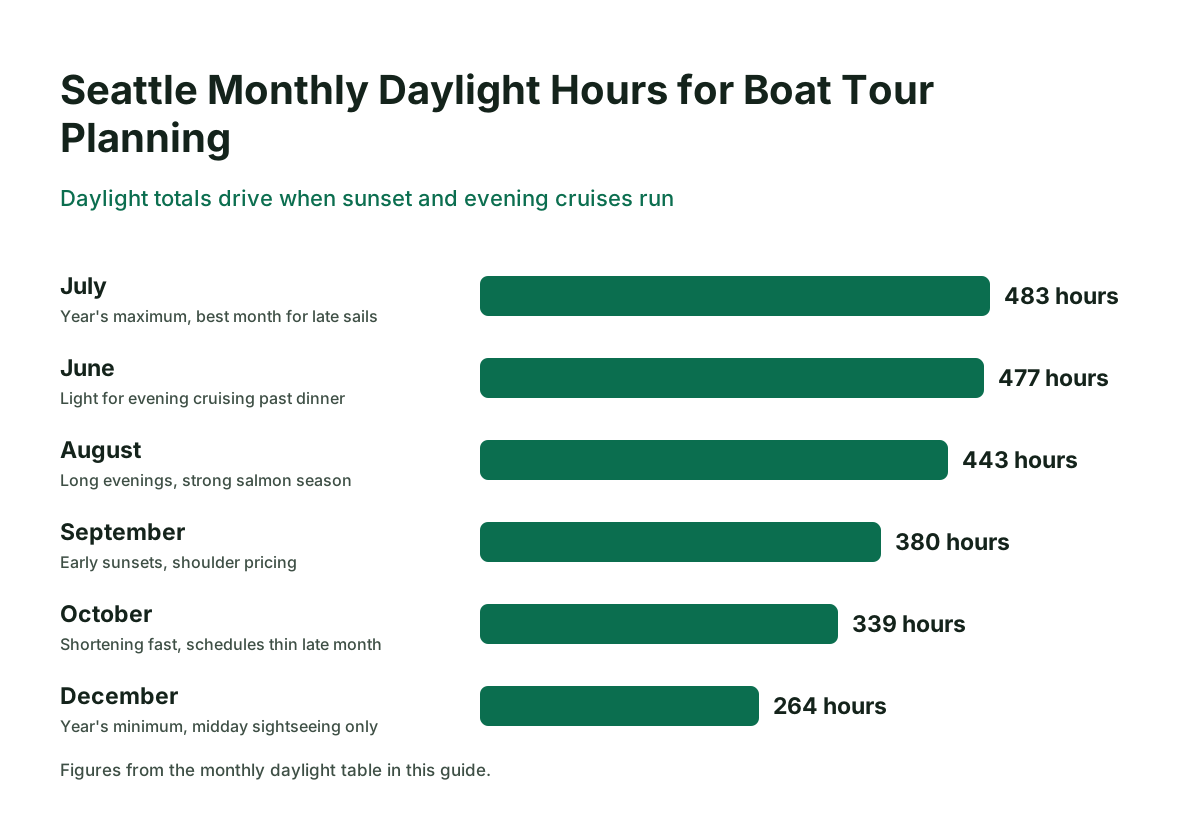
Daylight in Seattle swings from about 264 hours in December to 477 hours in June, a difference of over 200 hours a month, and that swing drives the entire cruise calendar. From May through August the city gets more than 440 hours of light a month, which is why sunset sails and evening harbor cruises run at full frequency then. From November through February, daylight drops below 285 hours and evening cruising mostly disappears.
The monthly totals tell the story cleanly. June peaks at 477 hours and 2 minutes, July edges past it at 483 hours and 19 minutes because of how the calendar lands, and August holds strong at 443 hours and 54 minutes. September still carries 380 hours, enough for early evening departures, but October's 339 hours and November's 282 hours push sunset earlier than most operators want for a dedicated sunset product.
| Month | Daylight hours | What it means for a boat tour |
|---|---|---|
| January | 275 hours 17 minutes | Short days, midday departures only |
| February | 284 hours 39 minutes | Still limited, schedules reduced |
| March | 367 hours 7 minutes | Afternoon light returns, shoulder season begins |
| April | 406 hours 22 minutes | Evening sails become viable again |
| May | 466 hours 52 minutes | Near-peak light, full schedules build |
| June | 477 hours 2 minutes | Peak, light for evening cruising past dinner |
| July | 483 hours 19 minutes | Year's maximum, best month for late sails |
| August | 443 hours 54 minutes | Long evenings, strong salmon season on the water |
| September | 380 hours 9 minutes | Golden early sunsets, shoulder pricing |
| October | 339 hours 32 minutes | Shortening fast, schedules thin late month |
| November | 282 hours 5 minutes | Reduced timetables on most routes |
| December | 264 hours 18 minutes | Year's minimum, midday sightseeing only |
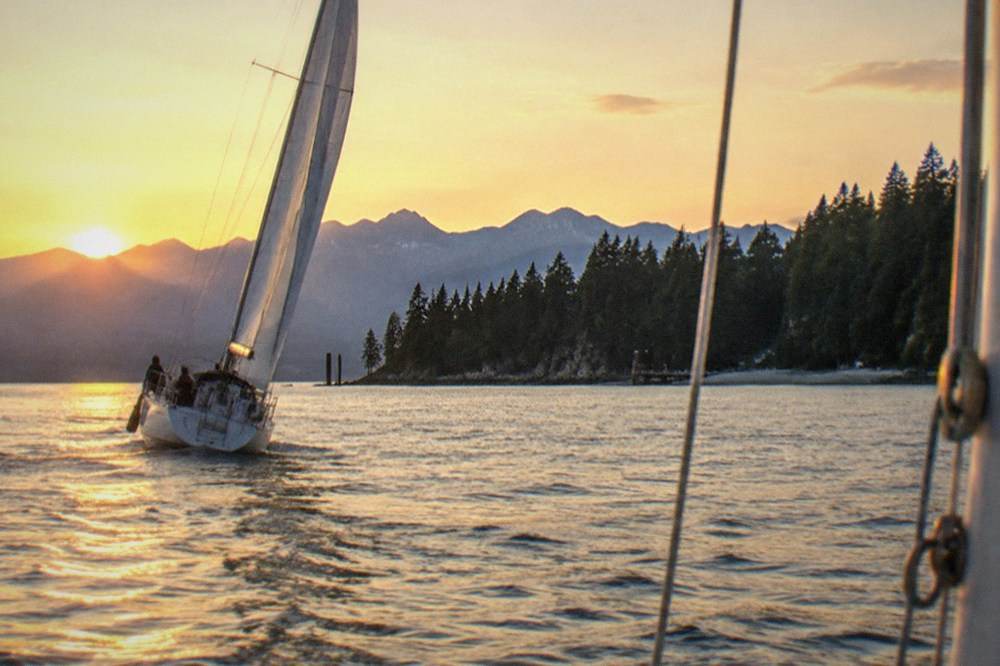
Evening sails are the product most sensitive to this curve. The Evening Colors Sunset Sail Tour in Seattle, a 2 hour trip rated 4.8 from 723 reviews with the listing showing "Booked 5+ times in 12 hours", depends on a sunset late enough to fill a departure slot after work or dinner, and that only exists in the May to September window. The listing carries free cancellation, which matters when a cloudy evening threatens the colors.
For readers comparing the evening options side by side, the Seattle sunset cruise guide covers the full roster of sunset and happy hour departures, including the BYOB sailing options that leave from the central waterfront. The short version: June and July give the longest usable evenings, September gives the warmest light at a more convenient hour, and anything after mid-October depends on the operator's shoulder schedule rather than the astronomy.
What Months Run Full Cruise Schedules On Elliott Bay And Lake Union?
The reliable core season is May through September, when harbor cruises, locks cruises, sunset sails and whale watching all run at or near daily frequency. April and October are shoulder months with good schedules that thin toward their edges, and November through March is when many operators reduce sailings sharply or pause them. The Alaska cruise season, April 17 to October 11, brackets the peak almost exactly.
Harbor cruising is the most weather-tolerant format on the roster. Seattle's Original Guided Harbor Cruise, a 1 hour narrated trip from Pier 55 rated 4.7 from 2252 reviews, from $45.7 on the listing, runs on the waterfront's most frequent timetable, and its listing shows real momentum with "5+ bookings in the past 6 hours". A one-hour loop with covered seating survives October drizzle that would end a sunset sail.
The Ballard locks route follows a similar pattern with a seasonal twist, since the locks themselves operate continuously year-round but the tour boats that transit them scale with demand. The locks move roughly 40,000 to 50,000 vessels a year between Puget Sound and the ship canal, and the cruise schedule leans on the same April to October demand curve as everything else on the waterfront.
| Month | Harbor and locks cruises | Sunset and evening sails | Whale watching |
|---|---|---|---|
| January | Reduced or suspended | Not offered | Sparse, holiday closures |
| February | Reduced or suspended | Not offered | Gray whales begin in North Sound |
| March | Shoulder schedules return | Limited | Gray whales, SRKW window approaching |
| April | Daily options build | First evening sails | SRKW season opens, Alaska season starts |
| May | Full schedules | Daily departures | SRKW and humpbacks both active |
| June | Peak frequency | Peak, latest sunsets | Peak whale season, busiest month |
| July | Peak frequency | Peak | Peak season, SRKW most reliable |
| August | Peak frequency | Peak | Chinook run peaks at the locks |
| September | Full, thinning late month | Golden hour standard | Strong season, daily tours continue |
| October | Shoulder, reduced late | Limited | Season winds down, last Alaska calls |
| November | Reduced | Not offered | About three days a week |
| December | Minimal or suspended | Not offered | Minimal, midday only |
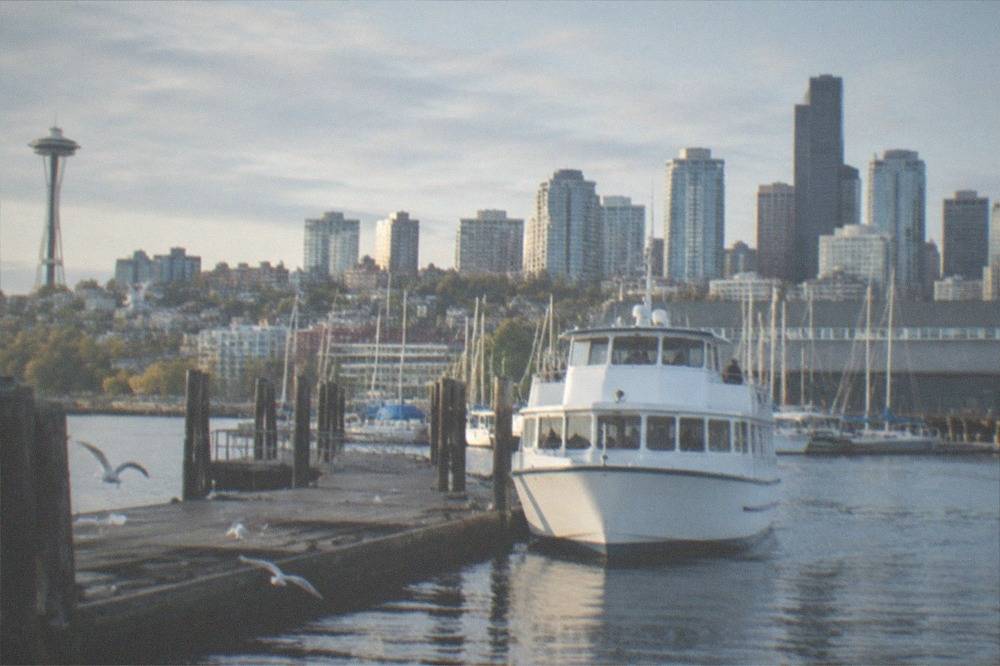
Washington State Ferries run their own distinct seasonal calendars, summer from mid-June to late September, fall from late September to December, winter from January to mid-March and spring from mid-March to mid-June, with reduced vessel counts in winter, per the WSF service contingency plan. That public system is a useful proxy for what the private tour fleets do, though the ferry never stops entirely the way some tour schedules do. The Puget Sound ferries versus tour boats guide explains the difference in what each one is for.
When Is Whale Watching In Puget Sound At Its Best?
The strongest whale watching window near Seattle runs April/May through September/October, when Southern Resident killer whales are most reliably in the wider Salish Sea and humpbacks are present May through October. Bigg's transient orcas are in Puget Sound year-round, and gray whales visit February through May, so there is some whale activity in every season, just not evenly.
The season windows matter because no tour can promise a sighting, and the honest framing is probability, not guarantees. Bigg's transients, which hunt marine mammals rather than salmon, have become steadily more common in Puget Sound over recent years and are now the ecotype most tours encounter outside the SRKW peak. Humpback numbers build through summer with surface activity often liveliest in late August and September. The wider set of guides lives on Seattle Boat Tours.
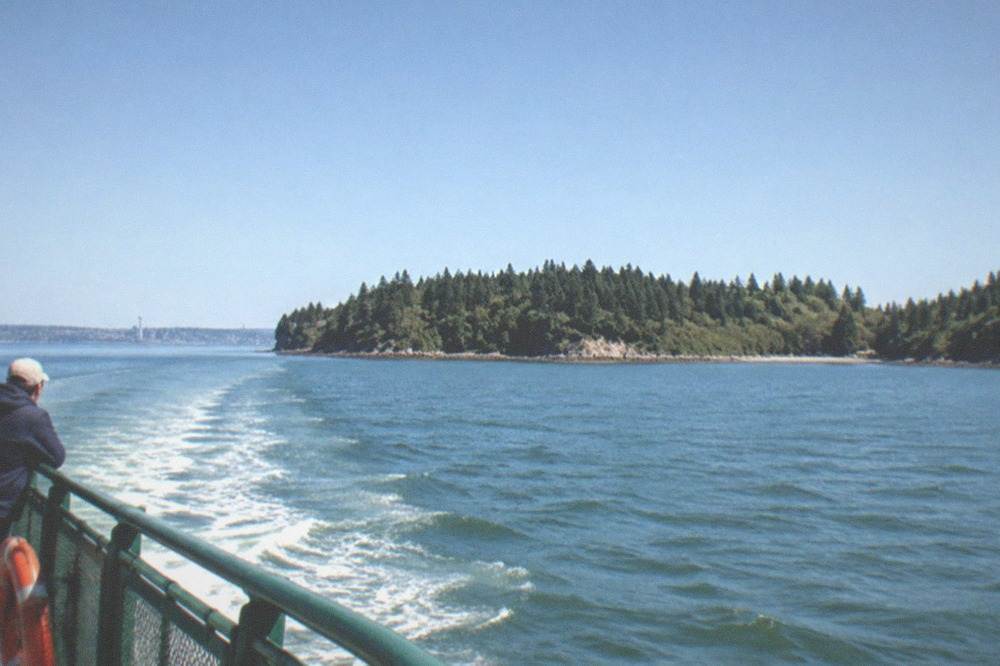
Federal and state rules shape every encounter regardless of season. Boaters must stay 1,000 yards from Southern Resident killer whales, travel under 7 knots within half a mile, and disengage their transmission if SRKW surface within 400 yards, while other orca ecotypes carry a 200 yard minimum, per Be Whale Wise and Washington law. A responsible tour treats those distances as the ceiling on how close the experience gets.
On the schedule side, the Seattle: Wildlife and Whale Watching Cruise runs 3 to 5 hours from 2701 Alaskan Way, rated 4.5 from 653 reviews, from $150 per person, with free cancellation and a "Likely to sell out" badge on the listing. Operators such as Puget Sound Express run daily departures through late September before dropping to roughly three days a week from early November, which is the pattern to plan around for a winter trip.
Weather interacts with whale watching differently than with sightseeing. The whales do not care about drizzle, and the large covered catamarans used on these routes handle a Puget Sound chop that would scrub a small sailing trip, so a gray September afternoon is often still a perfectly good whale day. What does cancel trips is sustained wind and heavy weather, not the rain Seattle is famous for. The Seattle whale watching tours guide goes deeper on the full roster and the ethics rules.
How Wet Is Seattle Month By Month On The Water?
Seattle's wettest months are November through March and its driest are July and August, and 2026 has followed that shape while running drier than normal overall. March was the anomaly, 6.71 inches against a 4.17 inch normal, while July delivered just 0.42 inches. For boat planning, rain in summer is usually a passing shower, while rain from November on is a steady background condition.
The monthly totals against their normals show how uneven the year really is. Even in a dry year, winter delivers four to seven inches a month, while high summer barely delivers half an inch. That is why covered vessels and climate-controlled salons matter more in the off-season, and why operators who run year-round advertise them.
| Month | 2026 rainfall | Normal (1991 to 2020) | Character on the water |
|---|---|---|---|
| January | 4.27 inches | 5.78 inches | Steady winter rain, cold spray |
| February | 2.92 inches | 3.76 inches | Showers between clear breaks |
| March | 6.71 inches | 4.17 inches | Wettest month this year, variable |
| April | 2.77 inches | 3.18 inches | Passing showers, bright spells |
| May | 1.14 inches | 1.88 inches | Mostly dry, sails run daily |
| June | 1.34 inches | 1.45 inches | Dry, long light evenings |
| July | 0.42 inches | 0.60 inches | Driest, most reliable month |
| August | 0.56 inches | 0.97 inches | Dry, warm water season |
| September | 1.03 inches month to date | about 1.61 inches | Gentle shift toward autumn |
| October | not yet recorded | about 3.5 inches | First real return of rain |
| November | not yet recorded | about 6.5 inches | Wet season resumes in force |
| December | not yet recorded | about 5.4 inches | Cold, wet, short days |
Two practical readings of that table. First, the gap between March's 6.71 inches and April's 2.77 inches is the single biggest month-over-month change in the record, which is why April feels like the true start of the season even though the calendar says spring began in March. Second, May's 1.14 inches makes it a genuinely dry month, so the common instinct to wait for July sometimes costs nothing but crowd levels.
Temperatures are the quieter half of the story. Daily means run from about 42.8 degrees in January to about 67 in July and August, with September still at a pleasant 62.6. On the water, wind chill matters more than the air temperature alone, and a 55 degree April afternoon can feel colder on a moving boat than a 50 degree October one when the wind differs.
What Should You Pack For A Seattle Boat Tour In Each Season?
Pack a waterproof layer in every month, because rain is possible year-round, then adjust by season: a warm hat and gloves from November through March, a fleece or light jacket for spring and fall evenings, and sunscreen plus sunglasses for May through September, when UV reflects hard off the water. Closed-toe shoes with grip matter on any deck, wet or dry.
The layering logic is simple. Even in August, an evening sail on Puget Sound drops the felt temperature ten degrees or more once the boat is underway, and the sunset departures that make June and July special are exactly the ones where a short-sleeve afternoon turns into a cold hour on the water. The what to wear on a Seattle boat tour post covers outfitting in more detail.
| Season | Typical conditions | What to bring |
|---|---|---|
| Winter, November to March | 43 to 47 degree means, frequent rain, short days | Waterproof shell, warm hat, gloves, insulated layers |
| Spring, April to May | 51 to 57 degree means, showers passing fast | Rain shell, fleece, sunglasses for bright breaks |
| Summer, June to August | 62 to 67 degree means, mostly dry | Sunscreen, sunglasses, light jacket for evenings |
| Fall, September to October | 54 to 63 degree means, rain returning | Waterproof layer, warm midlayer, brimmed hat |
Food and drink policies vary by format rather than by season, and several of the most popular departures are BYOB, which changes what you carry aboard. The bringing food on a Seattle boat cruise post explains which formats welcome a picnic and which provide everything onboard. In every case, pack so one hand stays free for railings, since Seattle docks get slick in the wet months.
One packing note specific to photography: the best light of the Seattle year is late September, when the sun sets early enough to catch golden hour on a 6 pm departure and the air still carries summer warmth. Photographers who want the skyline against warm sky without staying out until 10 pm should aim for that month, and bring a lens cloth regardless, because marine air films everything.
Does Seattle Weather Actually Cancel Boat Tours?
Rarely. Seattle operators run in rain and drizzle as a matter of course, and cancellations come mostly from wind, heavy weather or fog, not from the ordinary gray the city is known for. Covered and climate-controlled vessels keep harbor and whale tours running through conditions that would end an open sail, which is why format choice matters more than forecast-watching when you book.
The distinction matters for booking strategy. A sunset sail on an open 70-foot yacht depends on evening light, so a marine layer that kills the colors can feel like a wasted slot even when the trip still runs, while a covered harbor cruise delivers essentially the same product in drizzle as in sun. That is also why free cancellation, which every listing on this roster carries, is worth more on a sunset product than on a midday harbor loop.
Wind is the real gatekeeper. Sustained blows that whip up a chop on the Sound or make docking unsafe are what actually scrub departures, and those conditions concentrate in the storm months from November through February. Summer cancellations are uncommon enough that booking a week ahead in July is low risk, while the shoulder months reward a little schedule flexibility if a front happens to pass through.
The seasonal reduction in winter is therefore about demand and daylight as much as conditions, since many operators simply pause their public timetables rather than run half-empty boats through the dark months. The practical takeaway for a reader choosing a month: from May through September the weather is a minor variable, in April and October it is a manageable one, and from November through March the schedule, not the sky, is the thing to check first. Whatever month you pick, the trio below covers the formats that make the most of it.
Common Questions About Seattle Weather By Month
What Is The Wettest Month In Seattle?
On the 1991 to 2020 normals, the wettest months are November through January, each averaging more than five inches of rain. In 2026, March was the wettest month recorded so far at 6.71 inches, well above its 4.17 inch normal, an unusual spike in an otherwise dry year.
Which Month Has The Most Daylight In Seattle?
July, with 483 hours and 19 minutes of daylight in 2026, narrowly ahead of June at 477 hours and 2 minutes. Both months offer light well into the evening, which is when sunset sails and happy hour cruises run their fullest schedules.
Do Boat Tours Run In Seattle In Winter?
Some do, but far fewer. Many operators reduce or suspend regular public sailings from November through March, while a few run midday departures on covered vessels. Whale watching drops to roughly three days a week from early November. Check the operator's live listing for winter availability before planning.
What Is The Best Month For Whale Watching Near Seattle?
The strongest window is April/May through September/October for Southern Resident killer whales, with humpbacks present May through October. Bigg's transient orcas are in Puget Sound year-round, and gray whales visit February through May, so summer is the safest bet for the widest range of species.
Is Seattle Weather Too Rainy For A Boat Tour?
No. Summer months average under 1.5 inches of rain, and even wet months do not stop covered vessels. Rain in Seattle is usually light and steady rather than torrential, and tours run in it. The conditions that genuinely cancel trips are high wind and heavy weather, not ordinary drizzle.