Is Whale Watching In Seattle Worth It?
An honest assessment of whale watching from Seattle: real ratings and prices from the bookable tours, the season windows for orcas, humpbacks and gray whales, and the vessel-distance rules that shape every trip.
Is Whale Watching In Seattle Worth It?
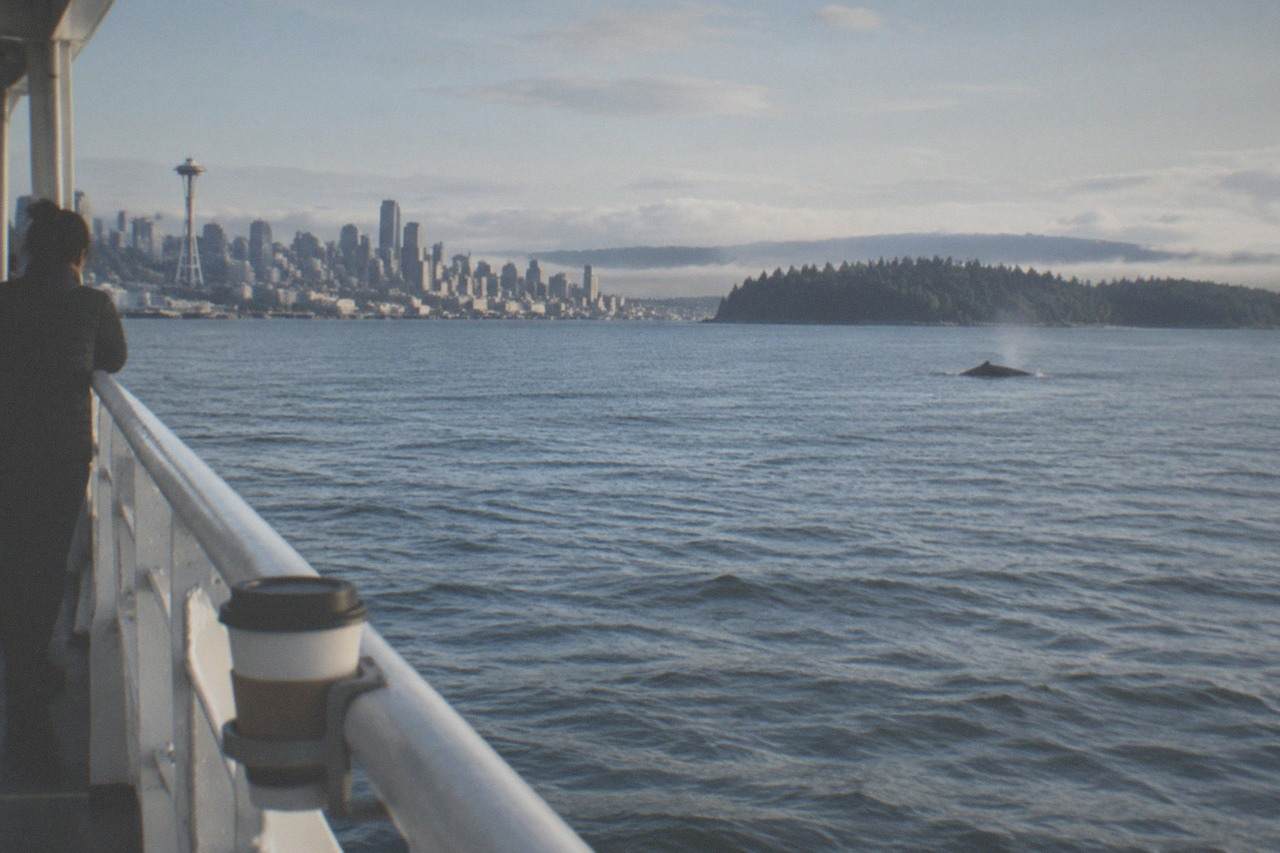
Yes, for most visitors, provided you book inside the right season window and accept two honest caveats: no operator can guarantee a sighting, and the law keeps every boat at a respectful distance from the whales. The main Seattle-based tour holds a 4.5 rating from 653 reviews at from $150 per person, which is a strong signal for a wildlife product, and orcas, humpbacks and gray whales all pass through Puget Sound on predictable seasonal schedules.
The question deserves a real answer rather than a brochure answer, because whale watching is the most expensive category on this site's roster. A harbor cruise runs about an hour and costs less than a dinner out. A whale watching trip from Seattle consumes half a day, costs $150 or more per person, and deals with wild animals that answer to no schedule. Whether that trade is worth it depends almost entirely on three things: the reviews, the calendar, and the rules.
Start with the reviews, because they are the only part of the equation you can verify before you book. The roster carries three whale watching products departing from Seattle, and their ratings and review pools are published on each live listing. Then look at the calendar, because Puget Sound whales are seasonal visitors, not residents on display. Finally, understand the distance rules, because they explain what "watching" means on the water: Washington law and federal regulations keep boats hundreds of yards, and in the case of Southern Resident killer whales a full 1,000 yards, away from the animals.
Those three tours are the full whale watching lineup that departs from Seattle itself on this roster, so the decision is genuinely between them rather than among a dozen lookalikes. The sections below weigh each factor in turn: what the ratings actually say, when the whales are actually present, how close the boats are allowed to get, and what the day feels like in practice.
What Do The Real Ratings Say About Seattle Whale Watching?
The Seattle: Wildlife and Whale Watching Cruise holds 4.5 from 653 reviews, from $150 per person, for a 3 to 5 hour trip. The half-day variant holds 4.3 from 390 reviews, from $154.97. The Deception Pass combination tour holds 4.8 from 22 reviews, from $368 per person for a 10 hour 30 minute day, and its review pool is too small to call it proven.
Ratings in this category tell you something the marketing copy does not: how a wildlife product behaves when the animals do not show up. A 4.5 across 653 reviews is a genuinely strong score for a tour whose core deliverable is partly outside the operator's control. Reviewers on the live listings consistently praise the crew's effort and the wildlife beyond whales, harbor seals, porpoises, seabirds, and treat orca sightings as a highlight rather than a given.
The 4.3 from 390 reviews on the half-day variant is a solid but noticeably lower score, and the gap is worth thinking about before booking. Both trips run 3 to 5 hours and both depart from 2701 Alaskan Way, so the difference is not the route or the dock. It is more plausibly expectations: the same animals, the same weather, a slightly different framing of the day.
The Deception Pass tour is a different animal entirely. At 10 hours 30 minutes and from $368 per person it combines whale watching with a road tour to Deception Pass, and its 4.8 rating comes from only 22 reviews. That score is encouraging but statistically thin; with a pool that small, a handful of enthusiastic reviews move the number a lot. It suits a visitor who wants a full-day excursion rather than a half-day boat trip, and it departs from the Sheraton Grand Seattle rather than the waterfront.
For most readers the 4.5-from-653 main cruise is the sensible default: the largest review pool on the roster's whale category, a mid-range price, and free cancellation on the listing, so a weather or schedule change does not strand the money.
When Can You Actually See Whales Near Seattle?
Bigg's (transient) orcas live in Puget Sound year-round. Southern Resident killer whales are most reliably in the wider Salish Sea roughly April/May through September/October. Humpbacks run May through October, and gray whales, including the local Sounders group, pass through February to May. Booking inside those windows is the single biggest factor in whether the trip pays off.
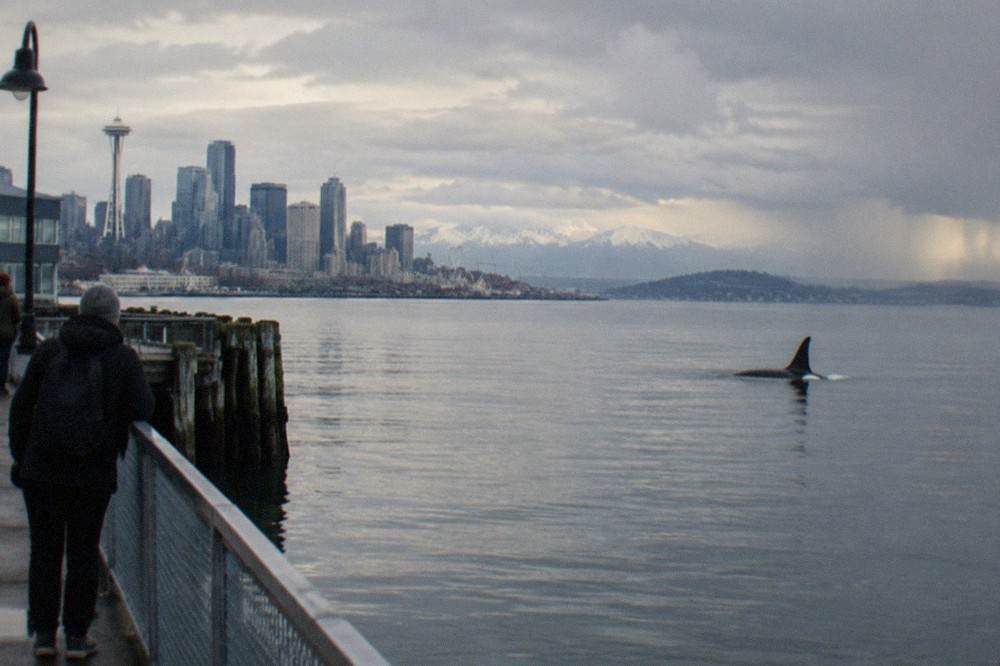
This is the part of the answer that no operator controls and no review can fix. Puget Sound is not a theme park; it is a working stretch of the Salish Sea, and the whales that feed in it follow food, not timetables. The season windows below are the documented pattern, and they are the reason a September booking and a February booking are genuinely different products.
| Species | Typical window near Seattle | Notes |
|---|---|---|
| Bigg's (transient) orcas | Year-round | Presence in inland waters has increased over recent decades |
| Southern Resident killer whales | April/May to September/October | Most reliable in the wider Salish Sea, peaking mid-summer |
| Humpback whales | May to October | Numbers build through summer, surface activity often late summer |
| Gray whales (Sounders) | February to May | Detour into North Puget Sound on the northern migration |
Two practical readings fall out of that table. If orcas are the goal, late spring through early fall stacks the odds best, and a summer trip overlaps with all three of the region's headline species. If gray whales are the goal, the window is the opposite end of the year, and a March trip is a different proposition from a July one. The whale watching listings on this roster run daily departures through late September before shifting to reduced frequency into winter, which matches the biology rather than fighting it.
The provisional July 2026 census counted 76 Southern Resident killer whales, up two from the 74 recorded in July 2025, and J pod made notable visits to inland Puget Sound that September. Those are encouraging numbers, but the Southern Residents remain an endangered population, and their visits to the central Sound are irregular even in a good year. A tour that finds Bigg's orcas instead is not a consolation prize; they are the ecotype most tours actually encounter.
The main wildlife and whale watching cruise is the roster's most-reviewed way to bet on those windows, and its 3 to 5 hour runtime fits the typical feeding-day pattern of the Sound's whales.
How Close Do The Boats Get To The Whales?
By law, not very. Boats must stay 1,000 yards from Southern Resident killer whales, travel under 7 knots within half a mile of them, and disengage engines if they surface within 400 yards. Other orcas, including Bigg's transients, get a 200 yard minimum. These rules are why whale watching here is respectful-distance viewing, never a close encounter.
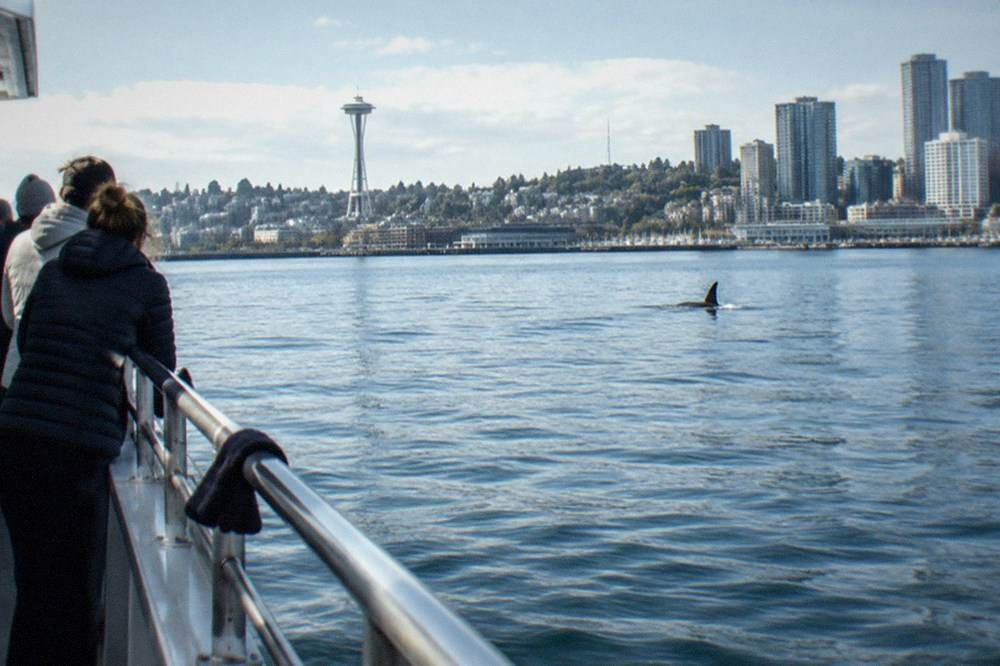
Washington's rules are among the strictest orca protections anywhere, and they reshape what a tour can physically deliver. A 1,000 yard approach distance for Southern Residents means the boat stops roughly half a nautical mile out, and that is not an operator being cautious; it is state law backed by federal authority. The full framework is published by Be Whale Wise, the NOAA Fisheries partner site that consolidates the regulations.
| Situation | Required vessel behavior |
|---|---|
| Southern Resident killer whales within 1,000 yards | Vessels must not approach closer |
| Within half a mile of Southern Residents | Speed under 7 knots |
| Southern Residents surface within 400 yards | Engines disengaged if safe |
| Bigg's/transient orcas | 200 yard minimum, never positioned in their path within 400 yards |
Does that make the trip worse? In practice, no, and it is worth saying why. Orcas are large, active animals; a dorsal fin breaching the surface and a pod traveling in view at a few hundred yards is a genuinely dramatic sight, and binoculars, which good crews hand out and use, close most of the remaining gap. The rules also protect the viewing itself: quiet, slow boats get natural behavior, while harassment produces dives and departures. Reviews of the Seattle trips frequently mention the crew explaining the distance rules on the way out, which tends to set expectations correctly before the first sighting rather than after.
The honest framing for a prospective booker is this: you are buying a day of competent wildlife viewing under the strictest orca rules on the West Coast, not an up-close photo shoot. If that sounds like a limitation, it is one every licensed operator in the region shares, and it is the reason the animals keep coming back to these waters.
Which Whale Watching Trip From Seattle Fits Your Day?
The main Wildlife and Whale Watching Cruise, from $150 per person for 3 to 5 hours, is the default pick for a half-day. The half-day variant at from $154.97 suits a similar schedule. The Deception Pass combination, from $368 per person over 10 hours 30 minutes, is a full-day excursion for visitors who want the bridge and the whales in one booking.
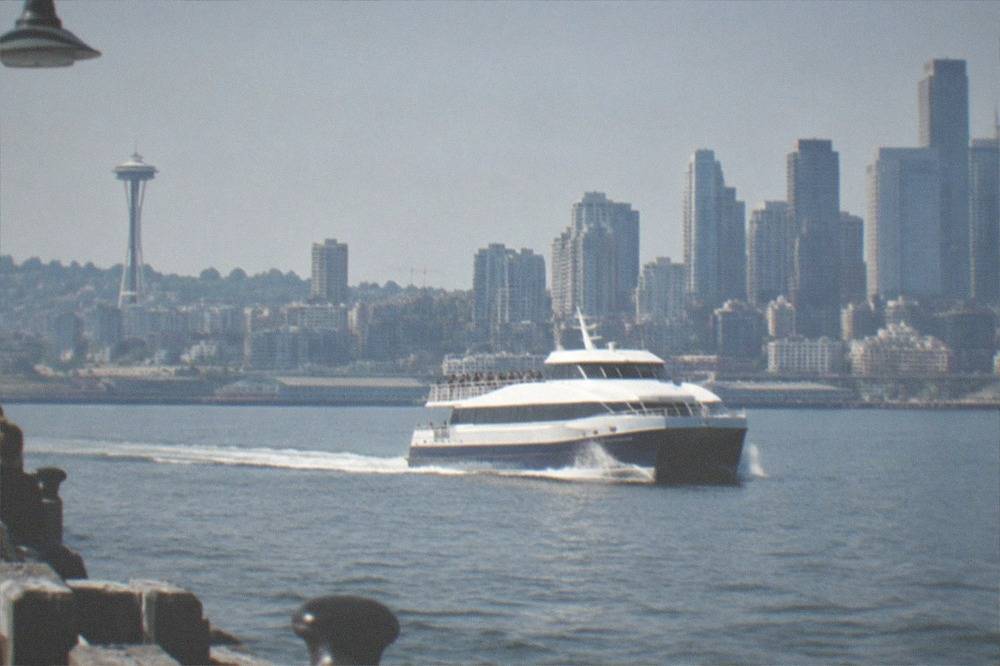
The choice is mostly about your day's shape, not the whales. Both half-day products cover the same waters from the same dock, so the decision between them comes down to price, rating and availability on your date; the 4.5-from-653 main cruise is the safer bet on reviews, and both carry free cancellation on their listings. The Deception Pass tour is the outlier: it trades the waterfront departure for a hotel pickup and a long day that pairs the boat trip with one of the most photographed straits in Washington.
| Tour | Duration | Price | Rating | Departs from |
|---|---|---|---|---|
| Seattle: Wildlife and Whale Watching Cruise | 3 to 5 hours | from $150 per person | 4.5 from 653 reviews | 2701 Alaskan Way |
| Half-Day Wildlife and Whale Watching Cruise | 3 to 5 hours | from $154.97 | 4.3 from 390 reviews | 2701 Alaskan Wy |
| Whale Watching + Deception Pass Tour | 10 hours 30 minutes | from $368 per person | 4.8 from 22 reviews | Sheraton Grand Seattle |
Two planning notes round out the comparison. The whale watching category is the one place where the season genuinely changes the product: a booking in the April/May to October window stacks orcas, humpbacks and good weather together, while a winter booking leans on Bigg's orcas and gray whales and shorter days. And the longer Seattle boating season context, roughly April/May through October for most operators on this roster, aligns with the Port of Seattle's record Alaska cruise season, which means summer waterfront crowds and dock traffic are real; booking ahead is sensible in peak months.
For readers weighing this against a cheaper format, the sightseeing alternatives are covered in the harbor cruise guide, and the broader cost picture is laid out in what a Seattle boat tour costs. If the question is whether whale watching justifies its premium over a $45 harbor loop, the answer is that it is a different product entirely: longer, wilder, and priced against a half-day commitment rather than an hour on the bay.
What Is A Whale Watching Day Actually Like From Seattle?
Plan on a half-day commitment with a check-in at 2701 Alaskan Way, a run out into Puget Sound and the Salish Sea, and a crew that narrates wildlife and enforces the distance rules throughout. Dress in layers, expect wind and spray even in summer, and treat orca sightings as the hoped-for highlight rather than the contracted deliverable.
The runtime range, 3 to 5 hours, is not padding; it reflects how far the boats travel to reach the day's best reports. Crews share sightings information across the region's operators, so a morning's trip often steams toward where orcas were logged earlier, which is why the same tour can be a short loop one day and a long run the next. That variability is the honest cost of watching wild animals, and it is also why the strong ratings carry weight: reviewers are scoring those long days, not just the lucky ones.
What you see besides whales is a real part of the value. Puget Sound's resident wildlife, harbor seals, harbor porpoises, Steller sea lions, bald eagles and the occasional minke whale, fills the gaps between headline sightings, and the best crews narrate all of it. The Seattle skyline receding behind the boat, the Olympics ahead, and Mount Rainier visible on clear days make the trip a sightseeing tour even on a quiet wildlife day, which is the quiet insurance policy behind the price tag.
The practical packing list is short and unglamorous: warm layers even in July, because the Sound is cold water and open-deck wind is real; a waterproof outer layer; binoculars if you own them; and motion-sickness consideration for anyone sensitive, since the boats cross open water. More detail on what to wear sits in the Seattle boat tour clothing guide, and the seasonal timing question is covered in full in choosing the best month for whale watching in Seattle.
So Is The Price Worth It? The Honest Verdict
For a visitor in Seattle between May and October who has a free half-day and wants the region's marquee wildlife experience, yes: the 4.5-from-653 main cruise at from $150 per person is a defensible spend, and the reviews support it. Outside the season window, or for a traveler who would be crushed by a no-show day, a harbor, locks or sunset cruise delivers guaranteed scenery at a third of the price.
The verdict really does split on the calendar and on temperament. Inside the peak window the trip stacks the odds well: three species in season, daily departures, and a large, well-reviewed operator base. Outside it, the same money buys longer odds, and the honest move is to say so rather than pretend a February booking equals a July one. The free cancellation on every whale watching listing on this roster softens the commitment, but it does not change the biology.
Temperament matters as much as the month. Travelers who enjoy the search itself, the boat, the water, the seals and the narration, consistently report good value even on quieter days. Travelers for whom the trip is only worth it if an orca breaches in frame tend to be the disappointed reviews, and no operator can fix that. The distance rules make close-up photography unrealistic by design; the memories that work here are the pod moving across the horizon and the sound of the boat going quiet.
Against the alternatives, the comparison is straightforward. A sunset sail from $65 or a locks cruise from $63.28 buys guaranteed scenery and a shorter commitment; whale watching buys a lottery weighted by season, with better odds than most lotteries in summer. If the budget only stretches to one boat trip and certainty is the priority, take the locks or the sunset. If the once-in-the-trip wildlife experience is the point, this is the category that delivers it, and Seattle Boat Tours exists precisely to make that kind of comparison legible.
Common Questions About Whale Watching In Seattle
Is Whale Watching In Seattle Worth It?
For most visitors between May and October, yes. The main tour holds 4.5 from 653 reviews at from $150 per person for a 3 to 5 hour trip, and the season windows favor orcas and humpbacks in that period. The caveats are real: sightings are never guaranteed, and the law keeps boats 200 to 1,000 yards from the whales depending on the ecotype.
What Is The Best Month To See Whales In Seattle?
There is no single best month, but the strongest overlap runs May through September: Southern Resident killer whales are most reliable roughly April/May through September/October, humpbacks run May through October, and Bigg's orcas are present year-round. Gray whales are a February to May specialty. A mid-summer booking stacks the most species.
Can A Whale Watching Tour Guarantee A Sighting?
No, and no listing on this roster claims one. Wild whales follow food, not schedules, and the season windows describe typical presence, never a promise. What a good tour guarantees is a competent crew, a full day on the water, and the region's non-whale wildlife, from seals to porpoises, in the gaps.
How Close Does The Boat Get To The Whales?
Washington law requires 1,000 yards from Southern Resident killer whales, speeds under 7 knots within half a mile of them, and engine disengagement if they surface within 400 yards. Bigg's and other orcas carry a 200 yard minimum. Expect respectful-distance viewing with binoculars, not a close encounter.
How Much Does Whale Watching From Seattle Cost?
On this roster, from $150 per person for the main wildlife and whale watching cruise, from $154.97 for the half-day variant, and from $368 per person for the 10 hour 30 minute Deception Pass combination. All three carry free cancellation on their listings.
Is Whale Watching Better From Seattle Or The San Juan Islands?
The San Juans sit closer to core Southern Resident summer habitat, and the trip there is a bigger commitment. From Seattle you get a half-day product with no island ferry logistics, at the cost of a longer run to reach the whales. For a Seattle-based visitor with limited time, the waterfront departure usually wins on convenience.