Are There Whales In Puget Sound Right Now?
Which whales are in Puget Sound in any given month, from year-round Bigg's orcas to seasonal humpbacks and gray whales, plus how to check live sightings before you book a tour.

The question sounds simple, and the honest answer is a moving target. Puget Sound is not an aquarium with a fixed cast of animals; it is a stretch of inland saltwater where four different whale groups come and go on their own schedules, some of them year-round residents and some of them passing through for a few weeks of feeding. The provisional July 2026 census counted 76 Southern Resident killer whales, up two from the 74 recorded in July 2025, and September 2026 brought notable J pod visits to central Puget Sound, including a passage south of the Tacoma Narrows that sighting networks flagged as an early-season first. So yes, whales are very likely in the Sound on any given week, but which whales depends almost entirely on the calendar.
Are There Whales In Puget Sound Right Now?
Almost certainly, yes. Bigg's (transient) killer whales are present in Puget Sound year-round, so on any given day the most likely whale in the water is a Bigg's orca. Whether the endangered Southern Residents, humpbacks, or gray whales are also there depends on the month: Southern Residents are most reliable April/May through September/October, humpbacks May through October, gray whales February through May.
Bigg's orcas are the quiet success story of the region. A decades-long dataset from the University of Washington, published in June 2026, shows which orcas are most at home in Puget Sound, and Bigg's matrilines such as the T36s, T37s, and T19s have increased their presence in inland waters steadily over recent decades. Sightings in 2026 were frequent across South Puget Sound, Saratoga Passage, and near Whidbey and Camano islands. They hunt seals and porpoises rather than salmon, so they follow prey rather than the chinook runs the Southern Residents depend on, which is one reason they show up in months when the Residents are elsewhere.
The Southern Residents are the harder sighting. The July 2026 census figure of 76 animals is provisional, pending final confirmation of the Greater L4 subgroup in L pod, but the direction is good news: no adult or juvenile deaths were reported in the prior year and multiple calves were documented. In September 2026, J pod, and at times L pod, made repeated visits to inland Puget Sound with active sightings near Point Robinson. Those were the first such visits since February in some reports, which tells you how uneven their presence is: months of absence, then a week of daily appearances.
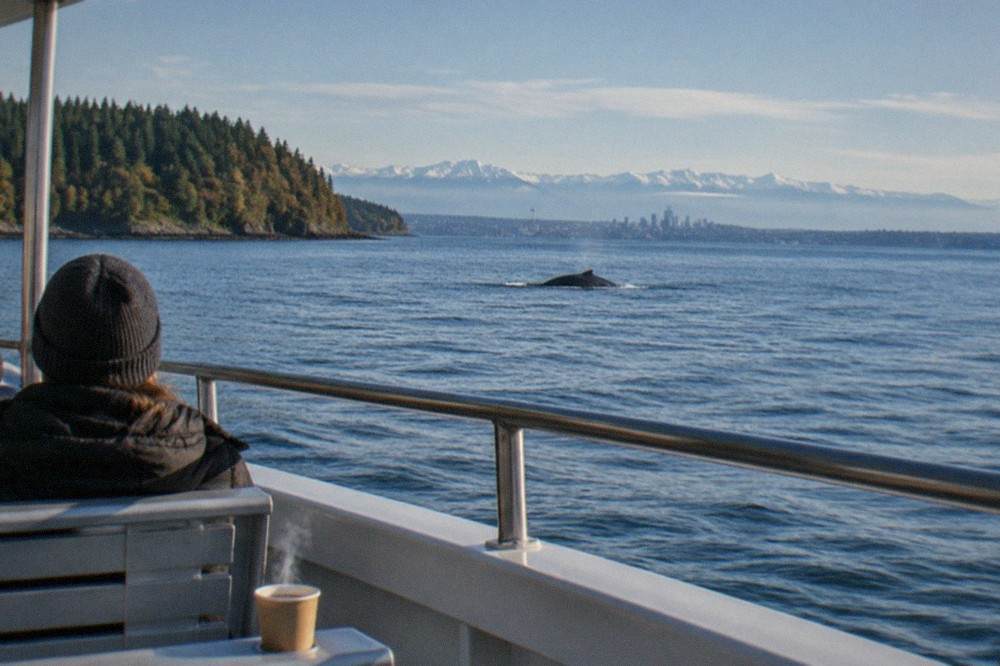
The practical takeaway for a visitor is that a whale-watching trip from Seattle is never a coin flip between "whales or nothing." The operators running these trips track the sighting networks daily and go where the animals were most recently reported, whether that is a Bigg's matrilne hunting seals off a South Sound shoal or a humpback feeding near the San Juan side of the boundary. The two main Seattle-departing options are the Seattle: Wildlife and Whale Watching Cruise, rated 4.5 from 653 reviews from $150 per person, and the Seattle: Half-Day Wildlife and Whale Watching Cruise, rated 4.3 from 390 reviews from $154.97, both running 3 to 5 hours with free cancellation on the listing.
Both of those cruises depart from 2701 Alaskan Way on the Seattle waterfront, and the Clipper Vacations cruise shows "Likely to sell out" and the FRS Clipper trip "Booked 3 times today" on their live listings, so booking ahead is the sensible move in peak months. A third option, the Whale Watching + Deception Pass Tour from Seattle, adds a land tour of Deception Pass to the boat trip across a 10 hour 30 minute day from the Sheraton Grand Seattle, rated 4.8 from 22 reviews at from $368 per person. It is a bigger commitment, but it is the one that pairs the water with a walk through the most dramatic strait in the region.
Which Whale Species Visit Puget Sound, And When?
Puget Sound hosts four regular whale groups: Bigg's orcas year-round, Southern Resident killer whales most reliably April/May through September/October, humpback whales May through October, and gray whales, including the local "Sounders" group, February through May. No operator can promise a sighting in any month; these are season windows, not schedules.
The gray whales are the most predictable of the four, because the Sounders are a known set of animals that detours into North Puget Sound every spring on its northern migration to feed on ghost shrimp in the shallow mudflats. Gray whale tour schedules for 2026, published by Puget Sound Express, ran February through April from the Edmonds and Seattle area and from Port Townsend. If you are in Seattle in March, a gray whale trip is the closest thing the region offers to a reliable sighting.
Humpbacks are the comeback story. After being nearly absent from the Sound for decades, they now appear most years from May through October, with numbers building through summer and surface activity, breaching and pectoral slapping, often peaking in late summer. They are the species most likely to be reported feeding in the same spot for several days running, which is exactly the pattern a tour operator can work with.
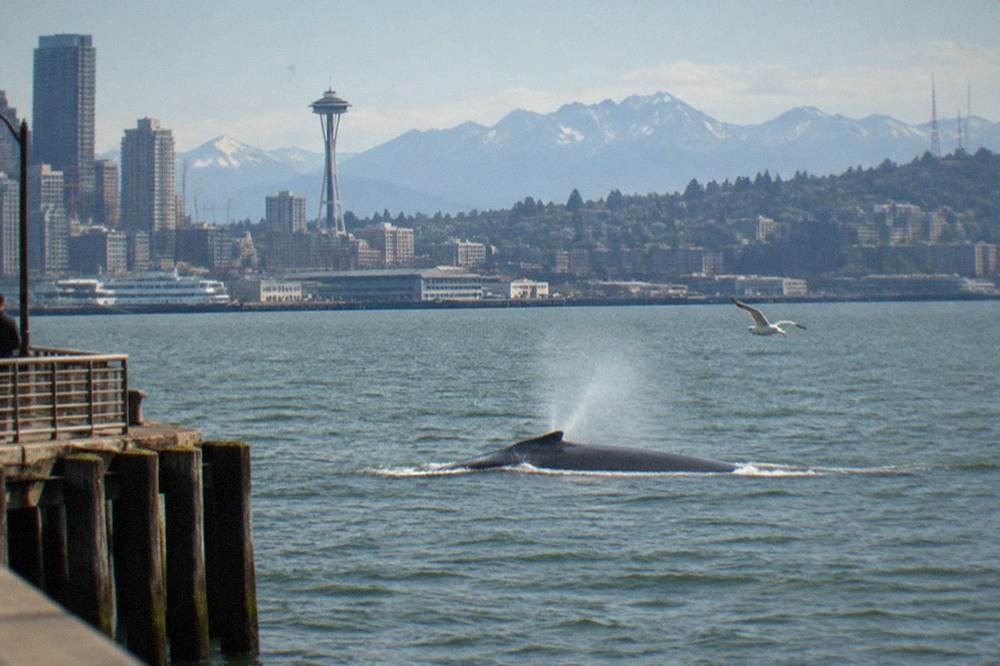
Here is the full calendar in one view.
| Species | Most Reliable Window | Where In The Sound | Notes |
|---|---|---|---|
| Bigg's (transient) orcas | Year-round | South Sound, Saratoga Passage, Whidbey/Camano area | Increasing presence over recent decades; feeds on seals and porpoises |
| Southern Resident killer whales | April/May to September/October | Inland visits vary; central Sound in Sept 2026 | Endangered; provisional July 2026 census: 76 animals |
| Humpback whales | May to October | Throughout the Sound and Salish Sea | Numbers build through summer; surface activity peaks late summer |
| Gray whales ("Sounders") | February to May | North Puget Sound mudflats | Detour to feed on ghost shrimp during northern migration |
One caution that matters more than the calendar: the sighting windows above are typical patterns, not promises. The verified season data on this subject, drawn from NOAA and regional sighting summaries, is explicit that month ranges are typical and no listing may state a month as a guaranteed-sighting month. Any operator quoting a sighting rate, such as the "97% sighting rate" claim on one Seattle listing, is presenting its own marketing figure, not an independent statistic, and the same trip in February and July can be genuinely different experiences.
How Can You Check Live Whale Sightings Before You Book?
The two main public trackers are the Orca Network sightings page, which posts whale sightings reports as they come in from observers around the Sound, and the Center for Whale Research census updates, which confirm Southern Resident numbers annually. Checking the Orca Network page the morning of a trip is the closest thing to a real-time answer to "are there whales out there today."
Orca Network publishes monthly sighting summaries and continuous reports, and its September 2026 reporting is what documented the J pod passage south of the Tacoma Narrows and the Point Robinson activity referenced above. It is a volunteer-fed network, so a report usually means a confirmed sighting by a shore observer or a boat, not a rumor. The Center for Whale Research runs the annual Orca Survey census, which is where the provisional 76-animal July 2026 figure comes from, pending final confirmation of the Greater L4 subgroup.
The Whale Museum's Sightings Archive is the third useful source, less for "right now" and more for seeing where a species tends to appear in a given month, since it has been used in long-term trend analyses. Between the three, a visitor can answer the question this article is titled with in about five minutes of reading, and with far more accuracy than any article like this one can offer for a specific date, because the animals move on their own schedule.
A whale-watching operator works exactly this way. The Seattle: Half-Day Wildlife and Whale Watching Cruise, rated 4.3 from 390 reviews from $154.97, carries "Booked 3 times today" on its listing and free cancellation, and its 3 to 5 hour runtime exists precisely so the boat can reach wherever the morning's reports place the animals.
For a trip this dependent on the day's reports, the booking terms matter as much as the route. The half-day cruise carries free cancellation on the listing, so a change of plans or a weather shift does not strand the ticket money, and the departure point on the Seattle waterfront keeps it within a short walk of the downtown hotels and the ferry terminal at Colman Dock. That combination of flexible terms and a central departure is what makes it the natural pick for a visitor deciding on the water the same week they arrive.
What Rules Protect Whales From Tour Boats In Puget Sound?
Boats must stay 1,000 yards from Southern Resident killer whales, travel under 7 knots within half a mile of them, and disengage engines if they surface within 400 yards. For Bigg's and other orca ecotypes the minimum is 200 yards, and vessels must not position in their path within 400 yards. These are state and federal rules, in effect since January 1, 2025, and they apply to every vessel including tour boats and paddlers.
The rules matter for a visitor's expectations as much as for the whales' protection. A lawful whale watch in Puget Sound is a respectful-distance experience: you will see orcas surfacing and traveling, and a good naturalist on the microphone will make the distance irrelevant by narrating what the pod is doing. What you will not get, on a law-abiding boat, is a bow-riding close pass of the endangered Residents. Washington's rules, under RCW 77.15.740 and Senate Bill 5371, are stricter than the federal baseline of 200 yards for most whales, and Canadian rules aligned to 1,000 meters from Southern Residents effective June 1, 2026, so the whole Salish Sea now operates on similar distances. The full regulations are published by Be Whale Wise, the NOAA Fisheries partner site, and by Washington Department of Fish and Wildlife.
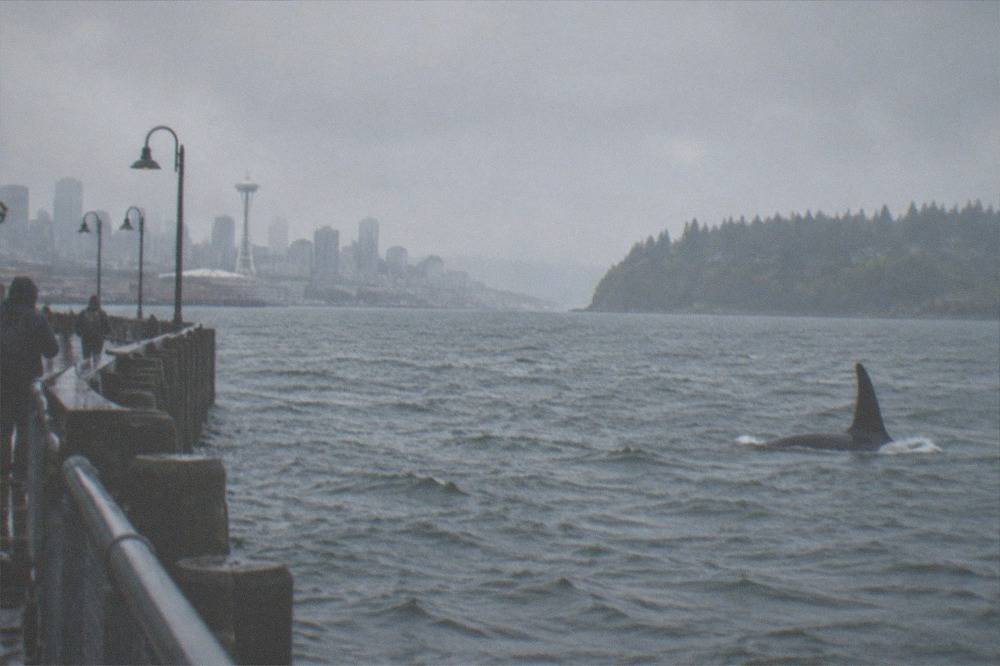
No 2026 changes to these distances were identified. What has changed is the presence of the animals the rules protect: the University of Washington's decades-long dataset, published June 2026, confirms that Bigg's orcas are now among the orcas most at home in Puget Sound, which is why a tour that follows the rules strictly still finds animals to watch on most trips. The rules are also why a sighting report matters more than a route map; the boat goes to the report, stops at the legal line, and lets the binoculars and the camera do the rest. The full index of guides sits on Seattle Boat Tours.
Is A Whale-Watching Trip From Seattle Worth It If Sightings Are Not Guaranteed?
For most visitors, yes, because the trip delivers more than the whales: a 3 to 5 hour circuit of Puget Sound with seals, porpoises, sea lions, and seabirds nearly always in view, plus a naturalist narration that explains the entire ecosystem. The two Seattle cruises run from $150 and $154.97 respectively, both with free cancellation on the listing, so the downside of a quiet day is limited to the ticket price.
The comparison worth making is not "whale trip versus no boat trip" but "which whale trip." The Seattle: Wildlife and Whale Watching Cruise, rated 4.5 from 653 reviews, is the largest-review option on the roster from Seattle and carries a "Likely to sell out" badge. The half-day version, rated 4.3 from 390 reviews, is the same water at nearly the same price. The Deception Pass combination, rated 4.8 from 22 reviews, is a 10 hour 30 minute day from the Sheraton Grand Seattle at from $368 per person, and with only 22 reviews it is a newer, less-traveled option rather than a proven one, but it is the only one that adds the state's most photographed strait to the itinerary.
Season timing changes the odds enough to plan around. The broader Seattle boating season runs roughly April/May through October, and whale-watching schedules follow it: daily departures through late September, shifting to reduced frequency, for example Wednesday, Friday, and Saturday only with holiday closures, from early November into January. A February visitor is not out of luck, but the trip on offer is a gray whale expedition, not the summer Resident-and-humpback circuit, and booking the same expectation in both months is the one reliable way to be disappointed.
For readers weighing the whole question of timing, the deeper season breakdown lives in Seattle whale watching by month, and the full tour-by-tour comparison, including the larger question of whether the trip justifies its price, is in the whale watching tours guide. The general case for and against is laid out in is whale watching in Seattle worth it.
Which Month Should You Visit To Maximize Your Chances?
July through September is the widest window: Southern Residents are most reliable then, humpbacks are near their late-summer peak, and Bigg's orcas are always possible, so a single trip can plausibly encounter two of the four species. February through May trades that variety for the gray whales' predictable mudflat feeding, and winter trips are fewer and longer odds.
If the goal is simply "whales, plural, on one trip," late August and early September are the strongest weeks in the region. The humpback surface activity peaks then, the September 2026 J pod visits show the Residents do come into the central Sound in that month, and the salmon runs that draw the Residents peak mid-summer. The trade-off is crowds: summer is also when Seattle's Alaska cruise season peaks, with the Port of Seattle recording 330 vessel calls and roughly 2.1 million cruise passengers in 2026, and the whale boats fill accordingly. The "Likely to sell out" badge on the main Seattle wildlife cruise and the "Booked 3 times today" tag on the half-day version are both real listing signals, not marketing copy.
Spring is the connoisseur's season. The Sounders gray whales are the draw, the water is quieter, and the trips that run February through May are built around a feeding behavior that repeats daily in the same spots. It is the one window where "right now" is easiest to answer affirmatively without checking a sightings page, because the animals are on a food source rather than a moving search.
| Month | Most Likely Species | Trip Availability From Seattle |
|---|---|---|
| January | Bigg's orcas | Reduced schedules, some holiday closures |
| February to May | Bigg's orcas, gray whales (Sounders) | Gray whale tours run Feb to April; daily service returns in spring |
| June | Bigg's orcas, early humpbacks, SRKW season begins | Daily departures, peak-season demand |
| July to September | SRKW, humpbacks near peak, Bigg's orcas | Daily departures through late September |
| October | Humpbacks, Bigg's orcas, late SRKW chances | Daily service tapering |
| November to December | Bigg's orcas | Reduced frequency, e.g. Wed/Fri/Sat only |
The one month-by-month caveat that deserves its own sentence: none of this is a guarantee, and the article you are reading can only describe the pattern. The morning-of check against the Orca Network sightings page remains the single best answer to the question in the title, and the operators do exactly that check before every departure.
Common Questions About Whales In Puget Sound
Are There Whales In Puget Sound Right Now?
Very likely. Bigg's (transient) killer whales are present year-round, so on most days some whale is in the Sound. Which one depends on the month: Southern Residents are most reliable April/May through September/October, humpbacks May through October, gray whales February through May. Check the Orca Network sightings page for a same-day answer.
What Kind Of Whales Live In Puget Sound?
Four groups appear regularly: Bigg's (transient) killer whales year-round, endangered Southern Resident killer whales most reliably spring through early fall, humpback whales May through October, and gray whales, including the local Sounders group that feeds on ghost shrimp, February through May. No species lives exclusively in the Sound; all four move across the wider Salish Sea.
Can You See Orcas From Shore In Seattle?
Occasionally, yes. Shore observers feed the Orca Network's sighting reports from points around the Sound, including places like Point Robinson, and September 2026 saw J pod active in the central Sound. But orca sightings from a downtown Seattle beach are rare and unpredictable; the reliable viewing is from a boat that can travel to where the day's reports place the animals.
How Close Can A Boat Get To Whales In Puget Sound?
Boats must stay 1,000 yards from Southern Resident killer whales, travel under 7 knots within half a mile of them, and disengage engines if they surface within 400 yards. For Bigg's and other orca ecotypes the minimum is 200 yards. These rules, in effect since January 1, 2025, apply to all vessels including tour boats and paddlers.
What Is The Best Month For Whale Watching Near Seattle?
July through September offers the widest mix, with Southern Residents near their most reliable, humpbacks near their late-summer peak, and Bigg's orcas always possible. February through May is the best window if gray whales are the specific goal, since the Sounders feed predictably in North Puget Sound then. No month carries a sighting guarantee.
Do Whale-Watching Tours Run All Year From Seattle?
No. Daily departures typically run through late September, then frequency drops, for example to Wednesday, Friday, and Saturday only, from early November into January, with holiday closures. The broader Seattle boating season runs roughly April/May through October. Check the operator's live listing for the schedule in the month you plan to visit.