Is Ballard A Nice Part Of Seattle?
Ballard is one of Seattle's most rewarding neighborhoods for visitors, mixing a historic fishing district, a Nordic main street, breweries, and the working Ballard Locks. Here is what to expect and how to see it from the water.
Is Ballard A Nice Part Of Seattle?
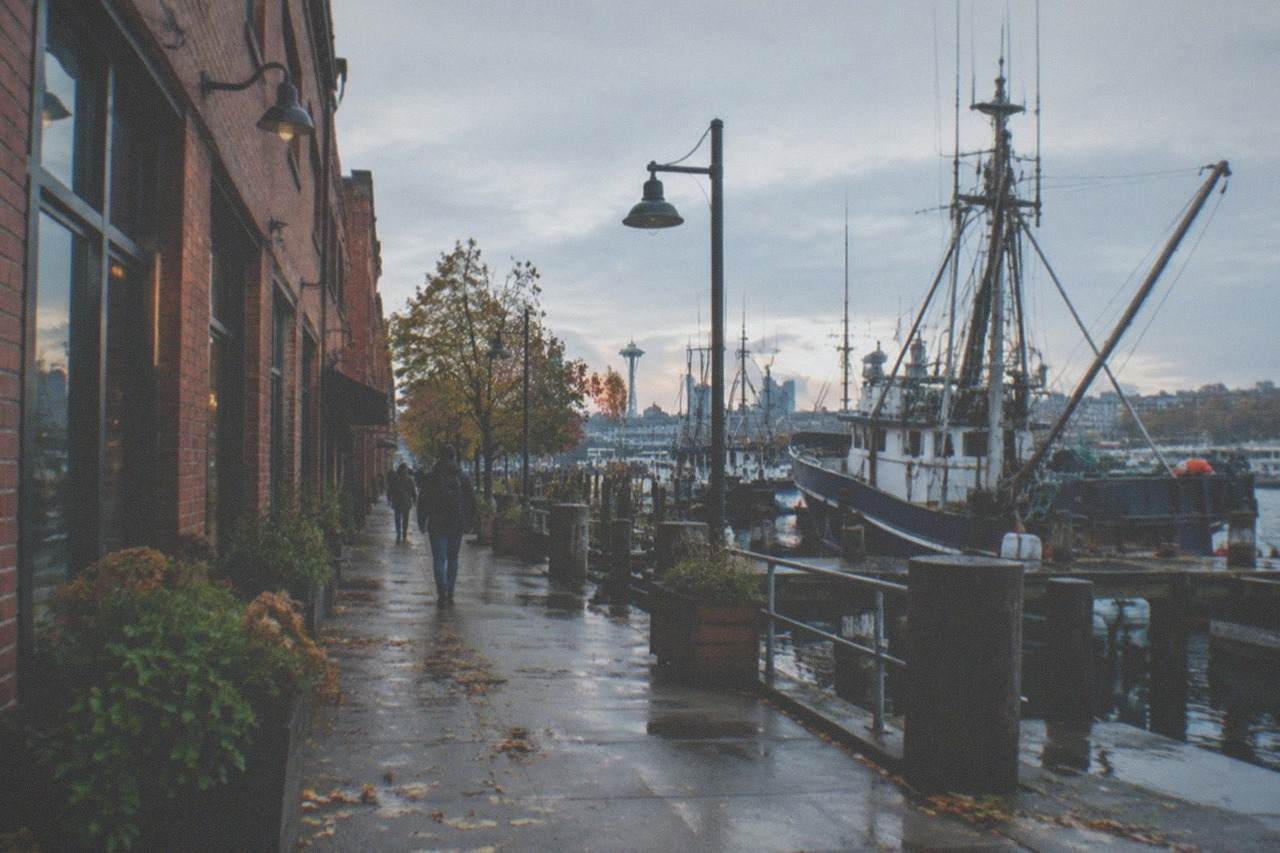
Yes, and for reasons that go well beyond scenery. Ballard is a former independent city, annexed by Seattle in the early twentieth century, and it kept its own downtown, its own working fishing fleet at Fishermen's Terminal, and its own identity. Add a compact, walkable main street, one of the densest brewery concentrations in the country, and the Hiram M. Chittenden Locks anchoring the neighborhood's northwest corner, and Ballard holds up as one of the city's most rewarding districts for a visitor with a free afternoon.
That answer deserves unpacking, because "nice" means different things to different travelers. Some arrive for the Nordic heritage and the boutiques along Ballard Avenue. Others come for the locks, where boats rise and fall as much as 26 feet between Puget Sound and the freshwater ship canal, and where salmon stack up at a viewing window in late summer. Still others simply want a neighborhood that feels like a place people live in rather than a corridor built for tourists, which is exactly what Ballard offers.
The neighborhood's geography helps. Ballard sits on a peninsula northwest of downtown, bounded by Puget Sound on the west, the Lake Washington Ship Canal on the south, and the Phinney Ridge and Greenwood neighborhoods to the east. Nothing about it feels like a satellite of the city core. It has its own main street, its own farmers market, its own library and city hall block, and a waterfront that still functions commercially, with the fishing fleet at Fishermen's Terminal and the locks complex run by the U.S. Army Corps of Engineers. Downtown Seattle is a 20 to 30 minute bus or car ride away, which keeps Ballard calm without isolating it.
For visitors weighing Ballard against other Seattle districts, the honest comparison is this: Capitol Hill has the nightlife, Pike Place has the postcard market, and Ballard has the texture. It is the neighborhood where you can watch a 100-foot fishing boat tie up, walk three blocks to a wood-fired bakery, and end the afternoon at a brewery patio, all without moving your car. The locks alone draw people from across the city, and the neighborhood around them has grown into a destination that justifies the trip on its own.
The easiest way to fold the water into a Ballard visit is a locks cruise, which transits the canal and the locks themselves rather than just viewing them from the bank.
All three of those options approach Ballard's water from a different angle. The locks cruise is the shared, narrated transit through the neighborhood's signature piece of engineering. The Lake Union private cruise and the tiki boat charter are private experiences on the freshwater side of the canal, better suited to groups celebrating something than to a solo afternoon of sightseeing. The rest of this article breaks down what each part of Ballard offers and how the pieces fit together.
Is Ballard A Nice Part Of Seattle?
Yes, Ballard is widely regarded as one of Seattle's nicest neighborhoods, thanks to its blend of historic maritime character, a thriving restaurant and brewery scene, walkable streets, and a strong sense of local identity. Residents and visitors alike praise its balance of urban energy and residential calm, making it a consistently popular place to live and spend time. It combines a walkable historic main street, a still-active commercial fishing industry, a dense concentration of breweries and restaurants, and the Ballard Locks, a functioning federal navigation facility that doubles as a free public park. Few Seattle districts pack that much variety into a comparable area, and fewer still keep a working waterfront alongside a visitor-friendly core, which is precisely the balance Ballard strikes.
Start with the neighborhood's spine, Ballard Avenue Northwest. This is the old main street, lined with century-old brick and stone buildings that housed banks, hardware stores, and saloons when Ballard was still its own city. Today those storefronts hold independent boutiques, record shops, cocktail bars, and some of the city's better restaurants, but the streetscape has kept its scale. Walking it takes 15 unhurried minutes end to end, and the side streets reward detours. Market Street, one block north, carries the faster commercial traffic, so Ballard Avenue stays comparatively calm even on busy weekends.
The neighborhood's Nordic roots run deep. Scandinavian immigrants settled here in the late nineteenth century to work in fishing, logging, and shipbuilding, and their imprint survives in the National Nordic Museum, in the Syttende Mai parade each May, and in a wave of modern Nordic bakeries and cafes that have opened along the corridor in recent years. This is not a theme-park version of heritage. Ballard's Norwegian, Swedish, and Danish history sits alongside a newer wave of Thai, Filipino, Mexican, and Somali businesses, and the neighborhood reads as layered rather than preserved.
Then there is the beer. Ballard has a dense, walkable cluster of craft breweries, a legacy of the neighborhood's industrial edges being repurposed over the past decade and a half. Stoup, Reuben's, Obec, and a dozen others sit within walking distance of one another, many with patios that fill on any dry afternoon. For a visitor, the practical effect is that Ballard is one of the few Seattle neighborhoods where a walking pub crawl between genuinely good breweries requires no car and no plan.
What rounds it out is the water on two sides. To the south, the ship canal and the locks; to the west, Shilshole Bay and the marina, with Golden Gardens Park beyond it, a sandy beach with mountain and water views that locals treat as the city's best sunset spot. A visitor who spends a full day in Ballard can do a morning at the locks, lunch on Ballard Avenue, an afternoon brewery stop, and an evening at the beach, all inside the neighborhood's boundaries.
For a deeper look at the locks themselves, including parking and walking routes, the Ballard Locks visitor guide covers the practical details, and the question of what to do at the Ballard Locks has its own full answer elsewhere on this site.
What Makes Ballard Avenue And The Historic Core Worth Walking?
Ballard Avenue is a genuine historic main street, roughly eight blocks of century-old commercial buildings that survived into an era of independent retail, and it is the single best place to feel the neighborhood's character. Walking it puts you among brick storefronts, local shops, and eateries in a compact stretch where the old core still shapes daily life. The buildings are modest, two and three stories of brick and sandstone, but the street has avoided both the dereliction and the full redevelopment that erased similar corridors elsewhere in the city. The result is a district that feels lived-in rather than staged, and one that rewards an hour of aimless wandering more than any planned itinerary.
The street's history explains its shape. Ballard boomed on timber and fishing as an independent city, and was annexed by Seattle in the early twentieth century after its water supply failed. The commercial buildings from that era still stand because the neighborhood's economy stayed modest for decades, with fishing and maritime trades paying the rent while trendier districts rose and fell elsewhere. When the city rediscovered Ballard in the years before and after the millennium's turn, the storefronts were already there, and new businesses moved into old shells instead of building new ones.
What you actually find on the street today falls into a few clusters. Food is the anchor: bakeries, oyster bars, taquerias, and a Sunday farmers market that takes over a block of the avenue year-round. Retail skews independent, with bookstores, record shops, and clothing boutiques rather than chains. In the evenings the tone shifts, as the cocktail bars and music venues open and the street becomes one of the city's better nights out. None of this requires an itinerary. The standard advice is simply to park once and walk.
Two practical notes improve the visit. First, the farmers market runs Sundays and is the neighborhood's most local scene, worth timing a trip around if you are here on a weekend. Second, the historic core is small enough that you can walk it in under an hour, but the blocks north of Market Street and the side streets between the two corridors hold enough additional restaurants and shops to fill half a day if you let them.
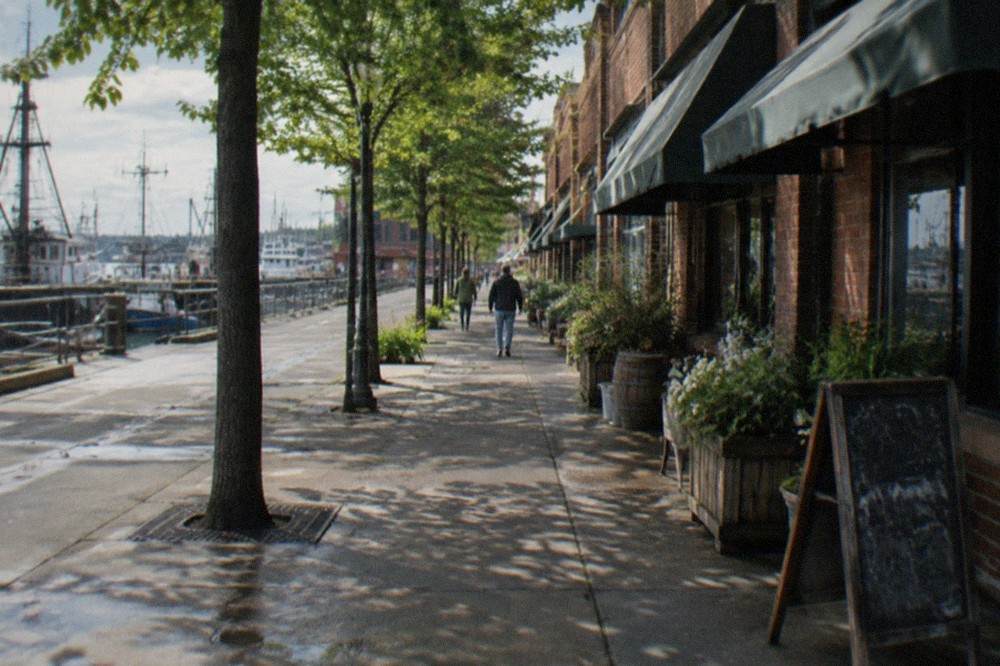
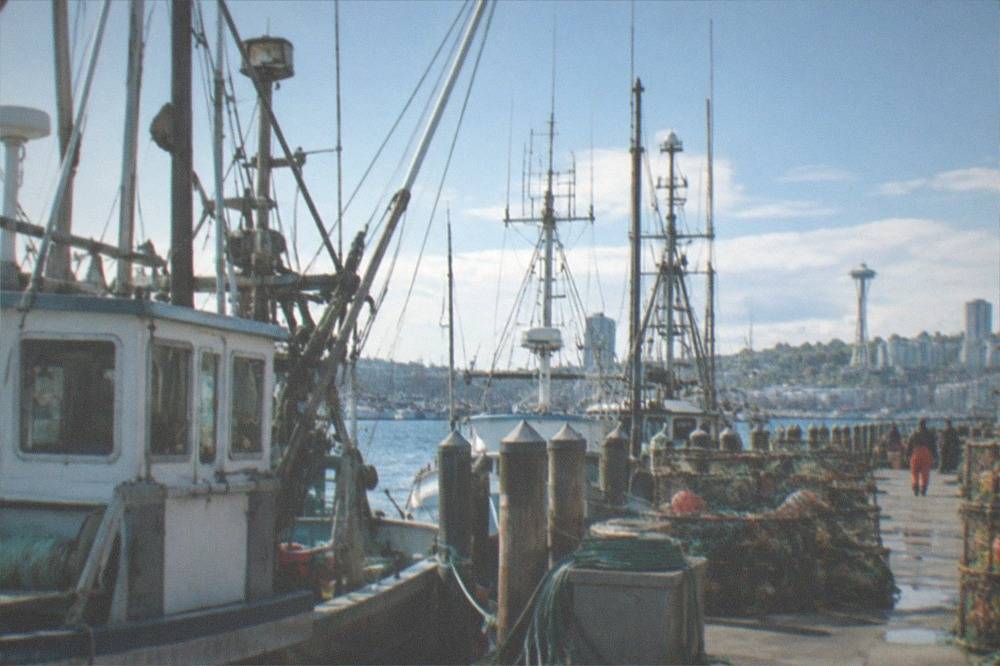
The neighborhood's character is not accidental, and its working side is what keeps it honest. Fishermen's Terminal, on the canal just east of the locks, is home to the North Pacific fishing fleet, one of the largest commercial fishing fleets on the West Coast. You can walk its docks, read the memorial to fishermen lost at sea, and eat salmon or fish and chips at the terminal's long-standing restaurants while working boats unload a few slips away. Very few urban neighborhoods anywhere offer that combination, and it is the reason Ballard reads as authentic rather than curated.
How Do The Ballard Locks Fit Into The Neighborhood?
The Hiram M. Chittenden Locks, opened in 1917, are the working centerpiece of Ballard: a U.S. Army Corps of Engineers facility that lifts and lowers boats between Puget Sound and the freshwater ship canal, surrounded by free public grounds and gardens. Roughly 40,000 to 50,000 vessels pass through in a typical year, making it one of the busiest lock complexes in the country, and the fish ladder beside the large lock lets visitors watch migrating salmon up close through an underwater viewing window.
The engineering is straightforward once you see it. Puget Sound is saltwater; the ship canal and the lakes beyond it are freshwater, sitting up to about 26 feet higher, and the level varies with the tide. The locks are the elevator that reconciles the two. The large lock, 80 feet wide and 825 feet long, handles the big vessels, and the small lock, 30 by 150 feet, takes the small ones, often cycling continuously on a summer weekend when pleasure boats queue in both directions. Watching a full lock cycle, the gates closing, the water dropping, the gates opening, is the kind of free spectacle that rewards patience.
The fish ladder is the other half of the visit. Salmon and steelhead migrate through the system, and a viewing room with windows into the ladder lets you watch them climb. The seasons matter: Chinook run primarily July through November with a peak in the last two weeks of August, and Coho run August through November peaking in late September, per the Army Corps' own fish ladder information. Sockeye pass through in early summer. If you time a visit for late August or September, the viewing window can be genuinely crowded with fish, which is not something most city neighborhoods can offer.
The grounds deserve more credit than they get. The Corps maintains the surrounding site as a public garden, with lawns, mature plantings, and free access daily from 7 a.m. to 9 p.m., the fish ladder viewing room open until 8:45 p.m. Locals treat it as a park, walking dogs and reading on the lawns while the machinery works around them. One planning note: the large lock closes for its annual maintenance in mid-November, with the closure scheduled November 2 to 20, 2026, and the small lock following with its own closure from December 7, 2026 to January 18, 2027, per the official closures page. The grounds stay open; the boat traffic pauses.
Seeing the locks from the water is a different experience from watching from the bank, and the neighborhood's signature boat tour is built around exactly that.
The Seattle Locks Cruise runs about two hours, departing from Pier 54 on the central waterfront or from AGC Marina on Lake Union, and transits the locks as part of the route rather than viewing them from outside. It rates 4.8 from 452 reviews, from $63.28, with free cancellation on the listing. A second operator runs a similar route, the Locks Cruise with Local Guide, from $56 per person, rating 4.8 from 94 reviews, also about two hours. Both connect saltwater and freshwater through the same lock chambers, so the choice between them comes down to departure point and price rather than route.
| Locks cruise option | Departure point | Duration | Rating and reviews | Price |
|---|---|---|---|---|
| Seattle Locks Cruise | Pier 54 or AGC Marina, Lake Union | 2 hours approx. | 4.8 from 452 reviews | from $63.28 |
| Locks Cruise with Local Guide | Pier 54/Seattle Waterfront or AGC Marina/Lake Union | 2 hours | 4.8 from 94 reviews | from $56 per person |
For visitors who want the full picture on whether the locks justify the trip, the question of whether the Ballard Locks are worth visiting is answered in detail elsewhere on this site, including what the free grounds offer if you would rather not take a boat at all.
If the locks are the reason you are coming to Ballard at all, it is worth checking dates before you plan the day around a boat transit.
Both locks cruises carry free cancellation on the listing, so a tentative plan can be locked in early and adjusted if the weather or the salmon schedule shifts. The shared cruises run on seasonal schedules rather than a guaranteed year-round timetable, so availability is worth confirming for your specific date.
What Can You Do On The Water Around Ballard And Lake Union?
Ballard sits on the freshwater side of one of the busiest recreational waterways in the region, and the options range from a 45-minute narrated canal cruise out of Fishermen's Terminal to private charters on Lake Union, the large freshwater basin just east of the locks. The canal connects the locks to Lake Union and then to Lake Washington, so a boat that starts in Ballard can travel the whole chain without ever touching saltwater, and the variety of trips available means most visitors can find a format that fits their group and their budget.
The low-commitment option is the Seattle Locks Cruise, a two-hour boat trip through the Ballard Locks, along the ship canal toward Lake Union, running Sundays with multiple daily sailings through late September, per the operator's schedule. It is short, cheap in spirit, and family-friendly, a good fit for visitors who want the canal perspective without committing an entire afternoon. On the free end, the Bookable Lake Union cruises depart from the Lake Union Park marina area and Gas Works Park historic vessels, first-come, first-served, which costs nothing and puts you on the water in a boat worth looking at.
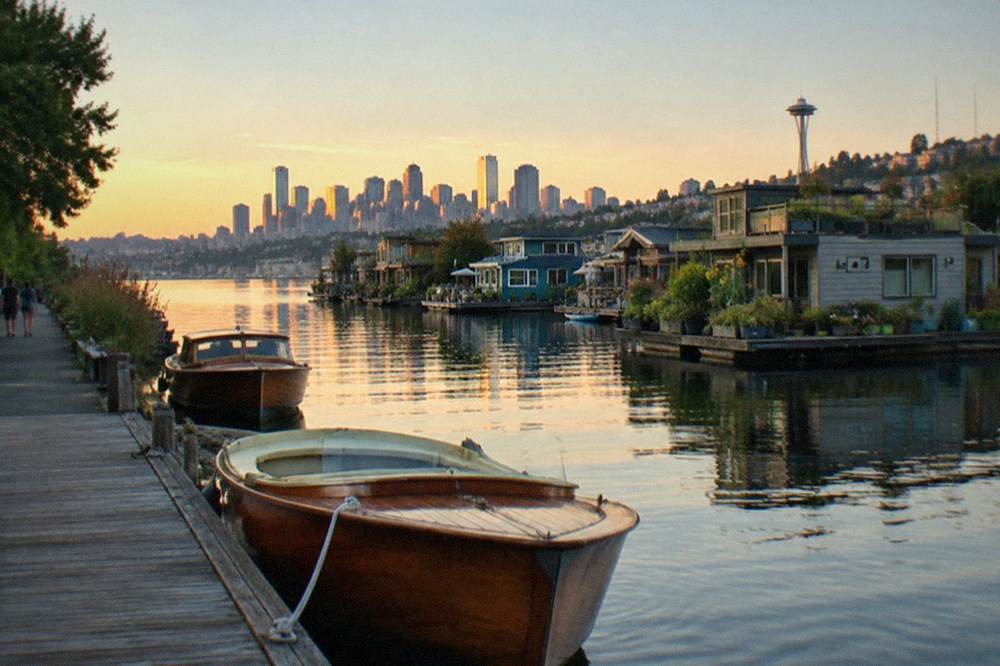
East of the canal, Lake Union is where most of the private charter action happens. The basin is ringed by floating homes, houseboats of every vintage, seaplanes taking off and landing, and the downtown skyline beyond the south end. Two of the private options on this site's roster operate there. The Lake Union Private Boat Cruise to Lake Washington runs about two hours from 901 Fairview Avenue North, from $85 per person, rating 5 from 4 reviews, a small review pool so judge it on its route rather than its stars. The Private Tiki Boat Charter on Lake Union runs 1.5 to 2 hours from the Fairview Walkway, from $827.63 for the whole boat with a cap of 15 people, rating 5 from 3 reviews, again a small pool.
The tiki boat is the group play: it is priced for the boat rather than per person, carries up to 15, and is BYOB in spirit and name, which makes it a common pick for birthdays and low-key celebrations. The Lake Union to Lake Washington cruise is the quieter alternative, a longer route that pushes east under the Montlake Bridge toward the bigger lake. Both are on the freshwater side, which matters for planning, since neither transits the locks. If the locks themselves are the draw, the shared cruise covered earlier is the one that goes through them.
One distinction worth drawing clearly: the public Washington State Ferry system runs the Seattle to Bainbridge crossing from Colman Dock, about 35 minutes each way, but that is public transit, not a tour, and it does not serve Ballard. The ferries-vs-tour-boats comparison matters mostly for visitors staying downtown who are choosing between a ferry ride and a cruise. From Ballard, the relevant water is the canal and the lakes, and the options above cover it.
| Water activity near Ballard | Where it starts | Time on water | Best for |
|---|---|---|---|
| Ice Cream Cruise | Fishermen's Terminal, Dock 9 | 45 minutes | Families, quick canal sightseeing |
| Locks Cruise (shared) | Pier 54 or AGC Marina | 2 hours approx. | Transit through the locks themselves |
| Lake Union private cruise to Lake Washington | 901 Fairview Ave N | 2 hours approx. | Small groups wanting a private route |
| Tiki boat charter | Fairview Walkway | 1.5 to 2 hours | Groups up to 15, celebrations |
| Center for Wooden Boats public sails | Lake Union | Short sails | Free, first-come, historic vessels |
The practical pattern most visitors land on is simple: one shared cruise for the narrated overview, either the locks route or the canal, and a private charter only if the group size justifies the boat price. A couple traveling alone has little reason to book a 15-person tiki boat, and a family of six will find the per-person math on a private cruise more favorable than six shared tickets on some routes.
When Is The Best Time To Visit Ballard?
The best time to visit Ballard is May through September, when the locks grounds are at their greenest and the salmon runs build toward their late-August peak. Across those months, the neighborhood's patios, markets, and waterfront activities all run at full tilt, giving you the fullest version of Ballard's outdoor life in a single visit. Seattle's boating high season runs roughly April and May through October, and Ballard follows that rhythm closely, with the strongest fish ladder viewing in late August and September and the calmest, grayest months from November through February. A visit planned inside the warm half of the year simply gets more of the neighborhood at once.
The salmon calendar is the one schedule worth planning around. Chinook peak in the last two weeks of August, Coho in the last two weeks of September, and the fish ladder viewing window is the rare attraction that genuinely changes week to week. A visit in mid-August can show dozens of fish resting in the ladder; a visit in June may show none. The 2026 season has been a solid one, with Chinook season totals past 13,771 and Sockeye past 31,302 by mid-September, so the late-summer window has delivered.
Shoulder seasons have their own case. May and early June bring long daylight, market season, and thinner crowds, and October offers the last of the dry-weather patios alongside the Coho run. Winter is the honest weak spot: rain is frequent, the grounds stay open but gray, and the locks' maintenance closures land in November, December, and January. The neighborhood itself, the breweries, the restaurants, the Nordic museum, keeps running year-round, so a rainy-day Ballard visit is far from wasted, but the water side of the neighborhood is at its best in the warm months.
Day of week matters almost as much as month. The farmers market runs Sunday mornings and is the neighborhood at its most local. Weekday afternoons are quietest on Ballard Avenue and at the locks grounds. Summer weekends bring both the biggest energy and the biggest crowds, with pleasure boats cycling through the locks continuously and the grounds filling by early afternoon, so an early start buys a calmer visit.
For readers thinking about the broader seasonal question, the site's guide to the best time for a Seattle boat tour by season covers how the whole region's schedule shifts month to month, and the same April-to-October pattern applies to nearly every cruise on the roster.
Pulling it together: Ballard earns its reputation in any season that has daylight, but the visit that combines everything, fish ladder, lock cycles, market, and a water trip through the canal, is a late-August or September one. That is the window when the neighborhood's working side and its visitor side overlap most completely.
Whichever way you assemble the day, the locks cruise remains the piece most specific to Ballard itself, the private charters are the upgrade for groups, and the neighborhood on foot is what makes the trip feel like more than a boat ride. For more on planning around the city's water generally, Seattle Boat Tours covers the full range of departures, from the central waterfront piers to the lakes east of the locks.
Common Questions About Ballard
Is Ballard A Nice Part Of Seattle?
Yes. Ballard combines a walkable historic main street, a working fishing fleet at Fishermen's Terminal, a dense brewery and restaurant scene, Nordic heritage sites, and the Ballard Locks with free public grounds. It functions as a destination in its own right, and most visitors can fill a full day without leaving the neighborhood.
Is Ballard walkable for visitors?
Yes. The historic core along Ballard Avenue is compact, roughly eight blocks, and the locks, Fishermen's Terminal, and Golden Gardens beach are all reachable on foot or by a short bus or car hop from the main street. Parking once and walking is the standard approach.
Does it cost anything to visit the Ballard Locks?
No. The locks grounds, gardens, and fish ladder viewing room are free and open daily, with grounds hours 7 a.m. to 9 p.m. and the viewing room until 8:45 p.m. Only the boat tours that transit the locks carry a ticket price; walking the site costs nothing.
When can you see salmon at the Ballard Locks?
Chinook salmon run primarily July through November with a peak in the last two weeks of August, and Coho run August through November with a late-September peak. Sockeye pass earlier in summer. Late August through September is the most reliable viewing window, and no sighting in any given week is promised.
How far is Ballard from downtown Seattle?
Ballard sits on a peninsula northwest of downtown, roughly a 20 to 30 minute drive or bus ride from the city core depending on traffic. It is far enough to feel like its own town, which reflects its history: Ballard was an independent city until Seattle annexed it in the early twentieth century.
Can you take a boat tour through the Ballard Locks?
Yes. The Seattle Locks Cruise runs about two hours between the central waterfront and Lake Union, transiting the locks themselves, from $63.28, rating 4.8 from 452 reviews, with free cancellation on the listing. A similar Locks Cruise with Local Guide runs from $56 per person.